


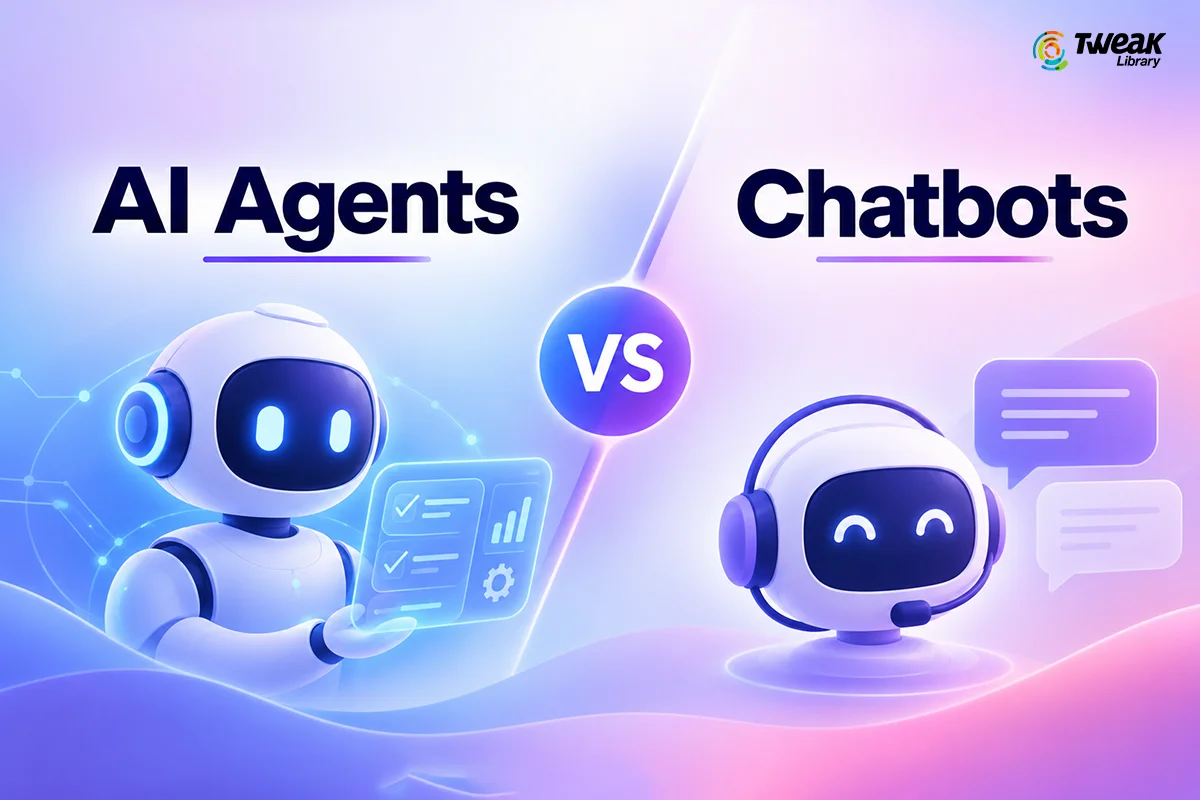
Summary
Chatbot and AI agents are the two terms often used interchangeably. If you are also making the same mistake remember a chatbot is designed to answer your questions while an AI with the use of other tools and software and by breaking tasks into small sub tasks makes sure the task is done without taking too much time. It can book appointments, compare prices, fill out the form, and do other things as instructed.
The tech industry every now and then keeps buzzing with new words. Earlier it was chatbots, now its AI Agents and soon it will be something else. It is like the minute you figure out what one is, another one is knocking the door.
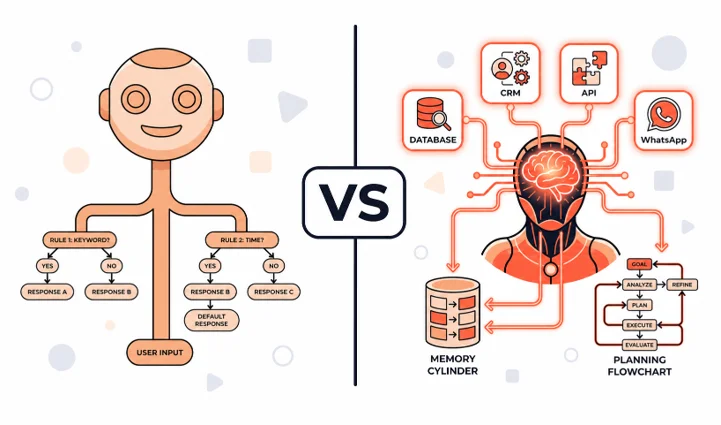
Chatbots are what you interact with when you open a banking app, a website etc. For example, when you open a financial app and you are asked to press a number to move further. While AI agents don’t work like this, they are more sophisticated and are capable of performing a task for you without seeking your approval at each step. You can say they are software that uses other apps and tools to decide the next steps for you without asking you to do anything. They don’t just reply with information waiting for next instructions, they plan everything waiting for you to execute.
Initially chatbots used to detect keywords and give you an answer but now they are changing with the help of large language models (LLMs). ELIZA was the first chatbot and they have been around since 1966.
What is a chatbot?
A chatbot replies to your typed text message or voice command. For example the chatbot in a food delivery app can tell you about your order, how you can get a refund but cannot call the delivery agent. In a banking app it can help with checking balance, talking to agents, etc.
It answers the questions without a human sitting on the other end.
Common Chatbots examples:
- The support widget on a website that answers FAQs.
- Siri or Google Assistant.
- The bank app bot that tells account balance or recent transactions.
What is an AI agent?
On the other hand an AI agent can comprehend, break tasks into small steps, access a website, database, compare options and complete the job for you.
Unlike chatbots it doesn’t stop after giving you an answer. It goes beyond that. It buys, edits, schedules tasks, and checks in only when your approval is needed.
Common AI Agent examples:
- ChatGPT’s agent mode that can browse the web, click through pages, and complete different tasks like comparing prices across sites or building a shopping list.
- Google’s Gemini agent that can plan things like a weekend trip, checks flights, hotel reviews, weather, marks it on calendar and sends an email when allowed.
- Amazon’s Alexa+ that can book an appointment, find a local service provider, manage your calendar, or reorder groceries.
- Perplexity’s browser-based agent can perform research or shopping tasks.
Chatbot Vs AI Agent
| Chatbot | AI agent | |
| What it does | Answers your question | Completes the assigned task |
| How it works | Look at the script or learned text to respond. | Uses tools to plan, analyze and take action |
| Ends with | A reply | Almost or finishes the task completely. |
| Needs your input | For every message | To start needs a prompt and approval on sensitive steps |
| Good for | Quick facts, FAQs, simple questions | Bookings, comparisons, multi-step job |
| Where it can go wrong | Giving vague answer | Suggesting incorrect steps if the request is misread. |
Explained with a quick example
To understand the difference in the simplest way let’s take the same example and see how it’s handled by chatbots and AI agents.
Question to chatbot “Give me some good weekend trip options under $200??”
What you get: Chatbot will list a few destinations, with an average price range, and a suggestion to check a booking site yourself.
This means you will get an idea and will have to do the rest of the work like comparing prices, picking the right destination and doing the bookings.
The same question when asked to an AI agent but phrased like a job that you want to be done.
Job assigned to an AI agent: “Plan a weekend trip for me with a budget under $200, and keep the best option for me to approve.”
What you get: A few suggestions for your weekend trip with details about the flight and hotel that will be under $200. To give you this the agent will cross check a few travel sites, then will check your calendar to ensure you don’t have anything else planned and will reply: “Here’s a Friday-to-Sunday trip to [destination], flights and a hotel under $200. Want me to book it?”
When you say yes, it will do the bookings and will add it to your calendar.
Same question but different result. That’s the difference based on the work they do.
How AI agents and chatbots work?
To use them you don’t need to understand what happens in the background. However, if you know, understanding the difference becomes easy.
An AI agent to complete a task will break it into steps, then will interact with different apps and tools. In contrast to this a chatbot only talks to you and will stay within the chat window. Moreover, AI agents retain long term memory across sessions, previous interactions and can test its response while chatbots only keep information of the current session and if there is an unexpected question or response they stop responding.
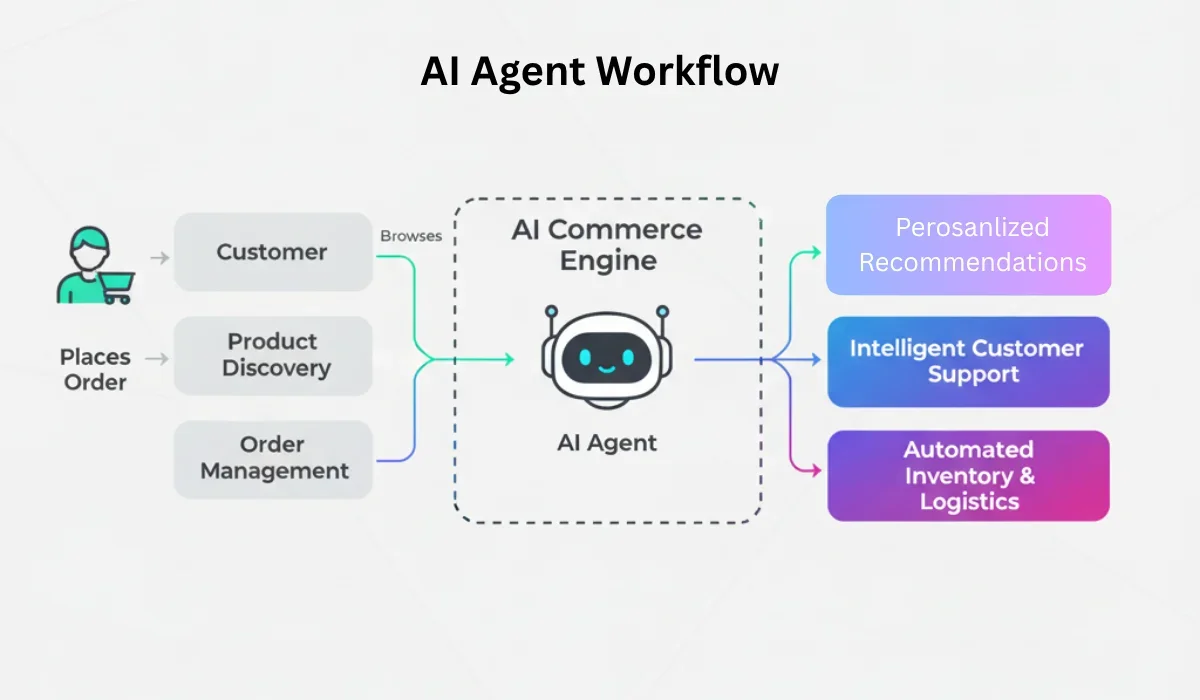
When you ask the AI agent to “find a weekend flight to Germany under 300 dollars and add it to the calendar,” it will not try to answer it in a go.
It will break the primary goal into sub tasks, then will interact with external software. For the above example, it will open a browser tab, search for flights, filter them by price, then will pick a time after checking your calendar, afterward will book or draft the booking, and will then create the calendar event.
Remember – None of them are flawless. AI agents also pause and ask several questions to give clear instructions and even tell what will happen if you take the XYZ step.
Frequently Asked Questions
If you want a low cost solution that you can control and which answers your simple and repetitive questions, chatbots are fine. However, if your work involves multiple steps, using different software, platforms, manual data entry, scheduling, reporting, and automation AI agents are the right choice.
The Bottom Line
Chatbots made conversations automatic and now AI agents are automating work. The shift from chatbots to AI agents isn’t about making chatbot talk better, it is about giving them the ability to interact with other software, plan, analyze and act without manual intervention. As the use of AI agents will increase, people will soon assign complex tasks to them so that more work can be done in less time while humans are handling other important tasks.


Leave a Reply